
Juan Castro Blanco National Park sits in the northern highlands of Costa Rica, an area far less crowded than Arenal or Monteverde despite protecting some of the country’s most important cloud forest and volcanic terrain. Locals often call it the “National Park of Water,” a nickname that points to the park’s real significance: it is one of the most important freshwater sources in the country. This guide covers the park’s history, geography, wildlife, trails, and everything a visitor needs to know before planning a guided hike into Juan Castro Blanco National Park.
Juan Castro Blanco National Park is a protected area in Alajuela Province, in northern Costa Rica, covering roughly 14,250 hectares (about 35,600 acres). The park was established on 22 April 1992 and falls under Costa Rica’s National System of Conservation Areas, within the Arenal Huetar Norte Conservation Area. It is named after a Costa Rican conservationist who advocated for protecting the region’s water sources, forests, and volcanic landscape before development could reach them.
The park contains three volcanoes: Platanar, Porvenir, and El Viejo, all of which are dormant. Elevation across the park ranges from lower foothill forest up to cool, misty highland terrain, which creates several distinct ecosystems within a relatively compact area. The reserve is the source of several of the country’s major rivers, and roughly 60 percent of the park is covered in primary forest, meaning it has never been logged and retains its original layered canopy structure.
The nickname is not marketing language. Juan Castro Blanco is considered one of the ten most important freshwater sources on the planet, and all five rivers that flow through the park support healthy populations of trout, an indicator of clean, cold, well oxygenated water. These rivers eventually feed the water systems that much of northern Costa Rica, including the San Carlos region, depends on for drinking water and agriculture. Conservationists frequently point to Juan Castro Blanco as one of the clearest examples in the country of a national park whose primary purpose is watershed protection rather than tourism.
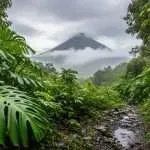
The park’s elevation and location on the Cordillera Central create a mix of forest types within a single protected area. Lower sections transition into rainforest, with trees reaching 30 meters or more in height, while higher elevations shift into cloud forest, where near constant mist supports an extraordinary density of orchids, bromeliads, ferns, and moss covered branches. Some sources describe pockets of the park reaching subalpine paramo conditions at the highest points, a landscape more commonly associated with the Talamanca range further south.
This ecological range is part of what makes Juan Castro Blanco valuable to researchers and birdwatchers alike. A single day hike can move through several distinct habitat types, each supporting different plant and animal communities, something that is unusual for a park of its size.
The park’s biodiversity draws serious birdwatchers, even though it remains far less visited than Costa Rica’s more famous parks. The resplendent quetzal is the park’s signature species, a bird known for its brilliant green and blue plumage and, in males during mating season, tail feathers that can grow several times the length of the bird’s body. March and April are generally considered the best months for spotting quetzals, which coincides with their breeding season in Costa Rica’s highland cloud forests.
Beyond the quetzal, the park is home to other rare birds including black guans and curassows. The forest also shelters endangered mammals such as jaguars and tapirs, along with coyotes, deer, ocelots, and several bat species, although sightings of large mammals are uncommon given the density of the forest and their naturally elusive behavior. Birdlife is by far the most consistent wildlife experience for day visitors, particularly on a naturalist-led cloud forest hike with a guide who knows where to look and listen.
The park protects three inactive volcanoes: Platanar, standing at roughly 7,162 feet, El Porvenir at about 7,428 feet, and El Viejo at approximately 6,969 feet. None of the three has shown volcanic activity in a very long time, which is part of why the park feels calmer and less geologically dramatic than Arenal, despite sharing the same conservation area. The park also contains hot springs that feed into local rivers as a result of ongoing geothermal activity in the region, a reminder that the volcanic system beneath the surface, while dormant, is still active.
Trail conditions in Juan Castro Blanco vary depending on which section of the park a visitor enters from, and access is generally more limited than at Costa Rica’s larger, more developed parks. Trails inside the park are not always well signposted, which is the main reason most visitors, even experienced hikers, choose to book a guided hike rather than navigating independently.
A typical guided day hike covers a 3 kilometer, roughly two mile, trail through cloud forest, taking about two hours of walking at a comfortable pace, not counting stops for birdwatching or photography. Some hikes conclude near a lake formed inside the crater of an ancient volcano, a highlight for visitors interested in the park’s volcanic history. Terrain includes muddy sections that can be slick after rain, which is common at this elevation, so proper footwear matters more here than on many of Costa Rica’s more manicured park trails.
The park sits inland from both the Arenal and San Carlos regions, and getting there typically requires a drive of roughly ninety minutes from La Fortuna across the plains of San Carlos. Some visitors note that the road into the park can be rough, and a vehicle with all wheel drive and high clearance is helpful, though a standard sedan can generally still make the trip. Because of the limited signage and unpredictable road conditions, most travelers coming from La Fortuna, San José, or Arenal book a guided tour rather than attempting a self drive visit, especially for a first trip to the park.
Local operators based in La Fortuna, such as Ecoterra Costa Rica, run full day guided hikes into the park that include transportation, a bilingual naturalist guide, and lunch, which removes most of the logistical uncertainty involved in visiting independently.
Costa Rica’s dry season, running roughly from December through April, generally offers the most stable hiking conditions and clearer visibility across the park’s cloud forest sections. March and April stand out specifically for birdwatchers, since this window overlaps with quetzal mating season. The green season, from May through November, brings more frequent rain and muddier trail conditions, but also means fewer visitors and lush, vivid forest growth, which some travelers prefer despite the added rain gear required.
Weather at this elevation shifts quickly regardless of season. Mornings tend to be clearer, while afternoon cloud cover and light rain are common, particularly in the park’s higher cloud forest zones.
Given the terrain and elevation, packing appropriately makes a meaningful difference in comfort. Hiking shoes, comfortable clothing, a change of clothes, a raincoat, a jacket, and insect repellent are commonly recommended by tour operators familiar with the park. Because temperatures at this elevation run noticeably cooler than in La Fortuna or along the coast, often in the 60 to 72 degree Fahrenheit range, a light jacket is worth packing even during the dry season. Binoculars are strongly recommended for anyone hoping to spot the resplendent quetzal or other highland bird species, since most sightings happen at a distance in dense canopy.
Most visitors approach Juan Castro Blanco as a full day trip rather than an overnight stay, since accommodation options near the park itself are limited compared to La Fortuna or Ciudad Quesada. A typical guided day trip departs early in the morning, generally around 7:30 AM, to take advantage of clearer weather and more active birdlife before midday cloud cover sets in. Travelers coming from San José can expect a longer drive than those based in La Fortuna, since the park sits closer to the northern lowlands than to the Central Valley. Booking in advance is advisable, particularly during the March and April quetzal season, when demand for guided birdwatching tours in the region tends to rise.
Juan Castro Blanco National Park will not suit every traveler. It lacks the extensive infrastructure, restaurants, and crowd amenities found at Costa Rica’s most visited parks, and getting there requires more planning than a straightforward day trip to Arenal Volcano National Park. For travelers specifically interested in serious birdwatching, quiet trails, and a park whose primary purpose is watershed conservation rather than tourism, it is one of the more rewarding destinations in the northern region. Visitors who prioritize convenience, shorter drive times, or larger, more developed trail systems may be better served by Arenal or Monteverde, both of which sit closer to the main tourist corridor.
Juan Castro Blanco holds a distinct place among Costa Rica’s national parks because its founding purpose was watershed protection rather than tourism or wildlife viewing on their own. When the surrounding forest reserve was first protected in 1975, the primary goal was to secure the headwaters that feed the rivers running through the San Carlos plains. That focus has shaped how the park is managed today: trail development has stayed limited on purpose, and the park has never pursued the kind of large scale visitor infrastructure found at places like Manuel Antonio or Arenal Volcano National Park. For travelers who value visiting a park that still functions primarily as a conservation area rather than a polished attraction, that restraint is part of the appeal.
The park’s role in protecting primary forest also matters beyond its own boundaries. Intact, uninterrupted forest canopy filters and regulates the water flowing into the rivers below, which is part of why water quality throughout the region remains high. Local conservation groups and the park’s management continue to monitor the watershed closely, since any disruption to the forest cover in this zone would have consequences far beyond the park itself.
Because Juan Castro Blanco sits inland from the main La Fortuna tourist corridor, many visitors pair a day trip here with other activities in the Arenal and San Carlos area rather than treating it as a standalone destination. Bajos del Toro, a small highland community near the park’s southern edge, is known for waterfalls and is often mentioned by travelers who explore the region independently. Visitors staying in La Fortuna frequently combine a hike in Juan Castro Blanco with other naturalist focused tours in the area, such as birdwatching outings, hikes to nearby lagoons, or wildlife spotting tours, since the region’s guided tour operators typically run several similar excursions throughout the week.
Juan Castro Blanco National Park represents a different side of Costa Rica’s protected areas, one built around water conservation and biodiversity rather than volcano views or adventure tourism. Its combination of primary rainforest, high elevation cloud forest, dormant volcanoes, and a healthy population of resplendent quetzals makes it a genuinely rewarding stop for travelers willing to venture slightly off the main tourist routes in the Arenal and San Carlos region. Visiting with a knowledgeable local guide remains the most practical way to experience the park given its limited trail signage and more remote access roads.
The park is located in Alajuela Province in northern Costa Rica, within the Arenal Huetar Norte Conservation Area. It sits roughly 100 kilometers north of San José and about ninety minutes by road from La Fortuna.
The park earned this nickname because it protects the source of several major rivers that supply drinking water and irrigation to much of northern Costa Rica. It is considered one of the ten most important freshwater sources in the world, making watershed protection its primary conservation purpose.
The park’s best known resident is the resplendent quetzal, best spotted in March and April during mating season. Other wildlife includes black guans, curassows, and a range of smaller birds, along with mammals such as coyotes, deer, ocelots, and occasionally more elusive species like tapirs.
A guide is strongly recommended. Trails within the park are not consistently well marked, and access roads can be rough, so most visitors join a guided tour that includes transportation and a naturalist guide rather than attempting to navigate independently.
A typical guided day hike covers about 3 kilometers, or roughly two miles, of trail and takes around two hours of walking. Most full day tours, including transportation and lunch, run about nine hours round trip from La Fortuna.
The dry season, from December through April, offers the most stable trail conditions and clearer views. March and April are especially recommended for birdwatchers hoping to see the resplendent quetzal during its breeding season.

With a passion for tropical wildlife and sustainable tourism, Emily brings the magic of Costa Rica directly to her readers. She spends her time exploring the hidden waterfalls, cloud forests, and diverse ecosystems surrounding La Fortuna. Emily’s mission is to share insider travel tips that help guests connect authentically with local culture and nature.
 Venado Caves Tour in Costa Rica: 10 Facts, Tickets, Price and What to Expect
 Rain or Shine: Things to Do in Arenal on a Rainy Day
 Best Time to Travel to Costa Rica: A Complete Month-by-Month Guide for 2026 and 2027
 Off Season Costa Rica: When to Go, What to Expect, and How Much You’ll Save
 Discovering the Wonders of Arenal Volcano National Park with Ecoterra
